Plotting Business in India: How to Start, Approvals, Costs and Profit
The plotting business is one of the most common ways to start in real estate in India: buy a piece of land, get it approved and developed as a layout, divide it into plots and sell them one by one. It needs less construction knowledge than building apartments, but it is not simple. Land title, approvals and selling speed decide whether a project makes money. This guide explains how the plotting business works, step by step.
What is the plotting business?
A plotting developer (also called a layout developer or land developer) buys agricultural or raw land, converts it for residential or commercial use, builds roads, drainage and basic services, and sells individual plots to buyers who later build their own homes. The developer earns the difference between the total cost (land, approvals, development, marketing) and the total sale value of all plots.
Step 1: Choose the location
Location decides how fast plots sell. Look for land that is:
- Near a growing town or city, ideally in its planned growth direction.
- On or close to a good road, with a clear legal access.
- Close to schools, hospitals, a market or an industrial area that brings jobs.
- Free of flooding, high-tension lines and disputes with neighbours.
Step 2: Check the land title thoroughly
Most failed plotting projects fail here. Before paying, have a property lawyer check the title chain for 30 years or more, the land records (7/12 extract, RTC, khata or the equivalent in your state), encumbrances, pending cases, and whether all owners and legal heirs are signing. A clean title is also what makes buyers and banks comfortable later.
Step 3: Get the land converted and the layout approved
Agricultural land usually has to be converted for non-agricultural use (NA conversion or change of land use), and the layout has to be approved by the local planning authority. The rules decide minimum plot sizes, road widths, and how much land must be left for open space and amenities. In most states, a plotted project above a small size must also be registered under RERA before it is advertised; the RERA Act's threshold is land above 500 square metres or more than eight units, and states may set lower limits. Check your state's current rules with your architect or consultant.
Step 4: Design the layout
A good plot layout plan sells faster: regular plot shapes, sensible plot sizes for local buyers, wide internal roads, and well-placed open spaces. Corner, park-facing and wide-road plots can be priced higher, which lifts the project's total value.
Step 5: Develop the site
Buyers pay more for a layout that looks ready: roads with kerbs, drainage, water supply, electricity, street lights, a compound wall and gate, plantation and plot markers. Development costs vary widely by location and specification, so get quotations before fixing the price list.
Step 6: Price and sell the plots
Price plots by their real value rather than one flat rate, offer a clear booking amount and instalment plan, and work with local brokers. Present the layout so buyers understand it on their phones, follow up every enquiry, and track bookings and payments carefully. Our guide on how to sell plots in real estate covers twelve ways in detail.
Plotting business costs and profit margin
There is no standard profit margin: it depends on what you paid for the land, approval and development costs, the share of land lost to roads and open space, the selling price and, above all, how fast the plots sell. A simple way to check a project before buying land:
| Item | How to estimate it |
|---|---|
| Saleable area | Total land minus roads, open space and amenity sites (often well under the full area; check your approved layout) |
| Total sale value | Saleable area × expected average selling rate |
| Land cost | Purchase price plus stamp duty, registration and legal fees |
| Approval cost | Conversion, layout approval, RERA and consultant fees |
| Development cost | Roads, drainage, water, electricity, wall, gate, plantation |
| Selling cost | Brokerage, marketing and sales office |
| Finance cost | Interest on borrowed money for the full selling period |
Profit = total sale value − all costs. The biggest risk is time: if plots sell over five years instead of two, interest and holding costs eat the margin. That is why selling speed matters as much as the land price.
Common mistakes in the plotting business
- Buying land before the title and access are verified.
- Advertising plots before approvals and registration are in place.
- Plot sizes that do not match what local buyers can afford.
- Tracking bookings and instalments in notebooks and spreadsheets, which leads to double-booking and missed payments.
- No follow-up system, so most enquiries go cold. See real estate lead management.
Tools that help a plotting developer
A plotting business runs on three things: a layout buyers understand, a live list of which plots are available, and a record of every booking and payment. zeplot gives you a live 3D plot map of your layout that buyers open from one link, and a plot management CRM for leads, bookings, instalments and brokers.
Frequently asked questions
Plotting business kaise kare?
Plotting business shuru karne ke liye: achhi location par saaf title wali zameen chuniye, uska NA conversion aur layout approval lijiye, RERA registration (jahan zaroori ho) karaiye, sadak, drainage aur bijli jaisa development kijiye, aur phir plots ko sahi price aur instalment plan ke saath bechiye. Sabse zaroori hai zameen ke kagaz ki puri jaanch.
Is the plotting business profitable?
It can be, when the land is bought at the right price, approvals are clean and the plots sell quickly. Slow sales and title problems are the main reasons projects lose money.
How much money do I need to start a plotting business?
It depends almost entirely on the land price in your area, plus approval and development costs. Many first-time developers start with a small parcel or in partnership with the landowner (a joint development agreement) to reduce the money needed up front.
Do I need RERA registration for a plotting project?
In most cases yes, once the project is above the size threshold set by the RERA Act and your state's rules. Plots generally cannot be advertised or sold before registration.
Want to see your own layout like this?
Get StartedMore from the blog
How to Create a Plot Layout in 3D: 4 Ways, Step by Step
Four ways to create a plot layout in 3D from your PDF or DWG, with steps, time, skills needed and the mistakes to avoid.
Read more →
Colony Layout Plan: Examples, Rules and How to Draw One
What a colony layout plan shows, typical plot and road sizes, layout examples, and how to get one drawn and approved.
Read more →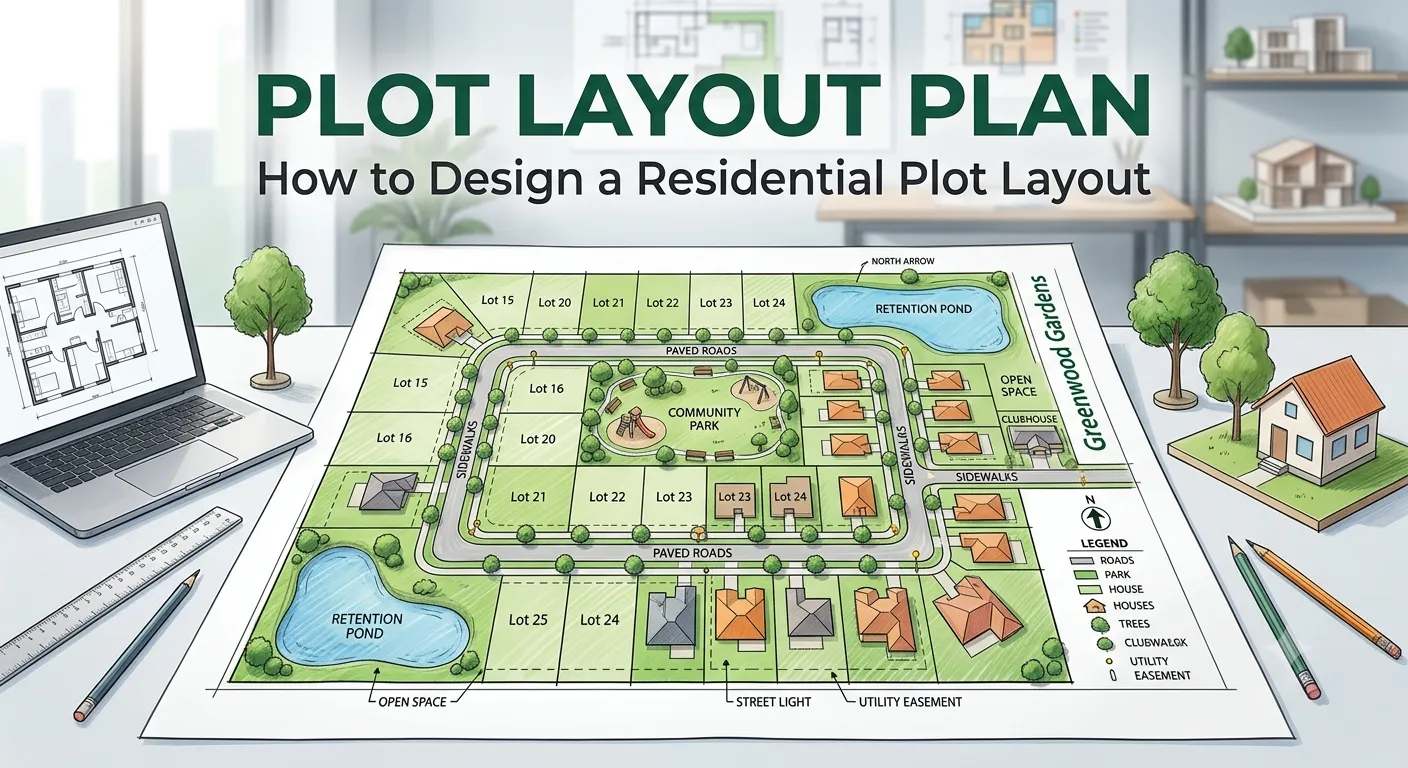
Plot Layout Plan: How to Design a Residential Plot Layout
A practical guide to plot layout design: plot sizes, road widths, open spaces, plot numbering and how to present the layout map so buyers understand it.
Read more →